
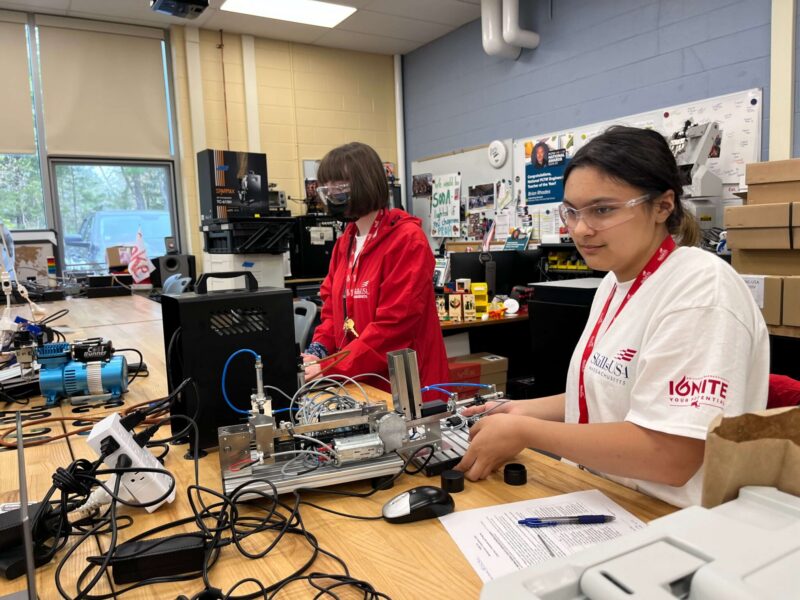
Industry 4.0 is revolutionizing the skillset today’s workforce needs to bring to the table. Cutting-edge manufacturing centers are a blend of human skills and automated systems, and the skilled labor gap is widening.
Workers trained to utilize and maintain mechatronics and leverage digital skills and data analysis are all in high demand in New England, outpacing demand in many other regions. Pre-engineering programs are under pressure to keep pace, but technology investments can be expensive. And how do you create projects and foster environments that will lead to competitive success?
Not every instructor is 100% comfortable incorporating these changes into their curriculum on their own—and that’s where AET Labs can help.
We specialize in curating, installing, and maintaining hands-on Industry 4.0 training technology that translates directly to industry-relevant skills. We also offer consultation on grants to purchase training equipment and ideas for the classroom to inspire learners to innovate and take control of their careers.
How Mechatronics Is Changing Manufacturing
Mechatronics is a broad field that incorporates automation, robotics, and even AI and VR. Tomorrow’s workers can expect to encounter these systems in a wide range of settings, including:
- Advanced manufacturing
- Quality control
- Medical technology
- Packaging and handling
- Industrial automation
Not only will workers be directly engaged with these systems on assembly lines, but skilled technicians will be required to program, optimize, and maintain them.
That means modern manufacturers need workers who bring a wealth of additional skills that come from hands-on experience with industry-relevant technologies, including:
- Critical thinking
- Problem solving
- Communication
- Automated workflow
- Safety and best practices
In many cases, these skills can’t be learned from a textbook—but industrial-grade mechatronics systems are often unapproachable and risky in classroom settings.
That’s where AET Labs comes in. We partner with New England institutions and educators to create ideal learning environments with powerful, relevant, hands-on training systems. Here are some of the best training systems and strategies for students we’ve found for pre-engineering programs today.
Classroom Technology
Festo MecLab
The Festo MecLab gives students a close-up look at the fundamental processes and technology that they’ll encounter on automated production and packaging lines today. Not only is this platform a powerful teaching tool, but it’s an intuitive and dynamic system that’s ideal for educators looking to build a curriculum.
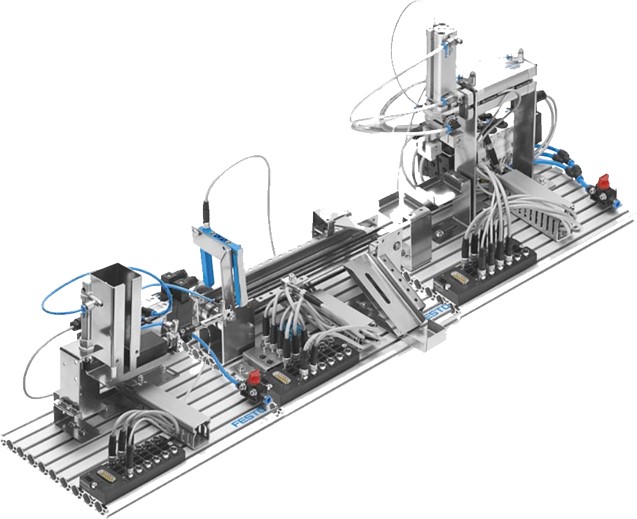
The MecLab comes with Stacking Magazine, Conveyor, and Handling stations that introduce users to pneumatic systems, sensors, electrical actuators, and digital workflows. Each can be used as a stand-alone or in coordination, and introduces Industry 4.0 fundamentals such as:
- Industrial production
- Terminology
- Simulation
- Programming
- System and sub-system interactions
Skills Conveyor Training System
The Skills Conveyor Training System is a modular, flexible system that introduces students to universal fundamentals of conveyor-based automation.
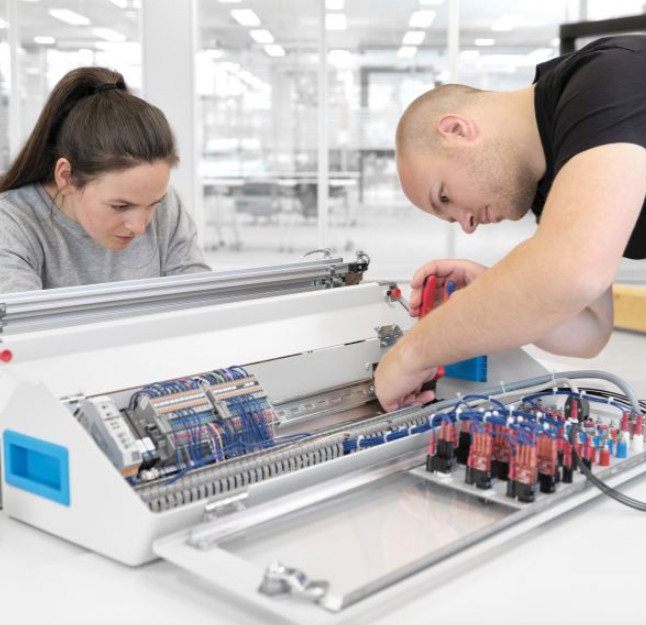
In addition to an understanding of basics like the mechanical construction, assembly, wiring, and commissioning of a conveyor belt, the Skills Conveyor familiarizes learners with how to optimize these systems for energy efficiency.
Students also gain an understanding of Industry 4.0 principles that apply to many different technologies, including:
- Control cabinets
- Sensor technology
- Flexible applications of industrial control elements
Curriculum and Project Ideas
PLC Starter Solution for the Festo MecLab
Programmable logic controllers (PLCs) are the central nervous systems of automated industrial systems. Utilizing a PLC requires not only a complete understanding of modern industrial technology, but critical thinking and analytical skills to coordinate these systems.
The Festo Logo 8 PLC Starter Kit, combined with the Festo MecLab, is an ideal entry point for creating a hands-on mechatronics project that connects students with the power of mechatronics and automated manufacturing. Its low learning curve lets learners dive into programming, gaining rapid insights into how conveyors, lights, pneumatic valves, and sensors can be digitally coordinated.
A simple project with the PLC Starter and MecLab involves many core skills that mirror real-world workflows, including:
- Basic setup and wiring
- Coding and software workflows
- Simple operations such as timed conveyor operation
Plus, it give students experience with chaining together operations like:
- Sorting
- Pallatizing
- Loading
- Packaging
Regardless of skill level or familiarity, this classroom mechatronics project offers a low-barrier, high-return experience for students who are interested in exploring industrial mechatronics and automated systems.
Industry-Recognized Certifications
One of the biggest concerns for pre-engineering instructors is offering skills and experiences that translate directly to the workplace experience. Technology evolves quickly, and it can be difficult for institutions to keep pace with industry-relevant skills.
Classroom technology manufacturers like Festo Didactic make it their business to stay on top of current industry demands, and that’s why they offer the Festo Industry 4.0 Certification Program for students and certification training for teachers. The benchmarks identified in this industry-recognized certification are NC3 certified and have evolved from Festo’s six decades of experience in technical education and industrial automation.
The Festo Industry 4.0 Certification Program offers multi-level training, including:
- Career Exploration. Focuses on STEM principles and hands-on experience with technologies and systems.
- Fundamentals. Delivers essential skills for a career in Advanced Manufacturing and a broad introduction to Industry 4.0 elements such as robots and mechanical systems.
- Applied. Students explore maintenance, troubleshooting, optimization, and process control to achieve safe, integrated workflows.
Hands-On Competition
AET Labs is proud to head up the Massachusetts SkillsUSA mechatronics competition, inspiring the next generation of Industry 4.0 leaders and skilled workers across the nation. This event highlights applied skills and knowledge of mechanical systems, pneumatic technology, electronics, and controls.
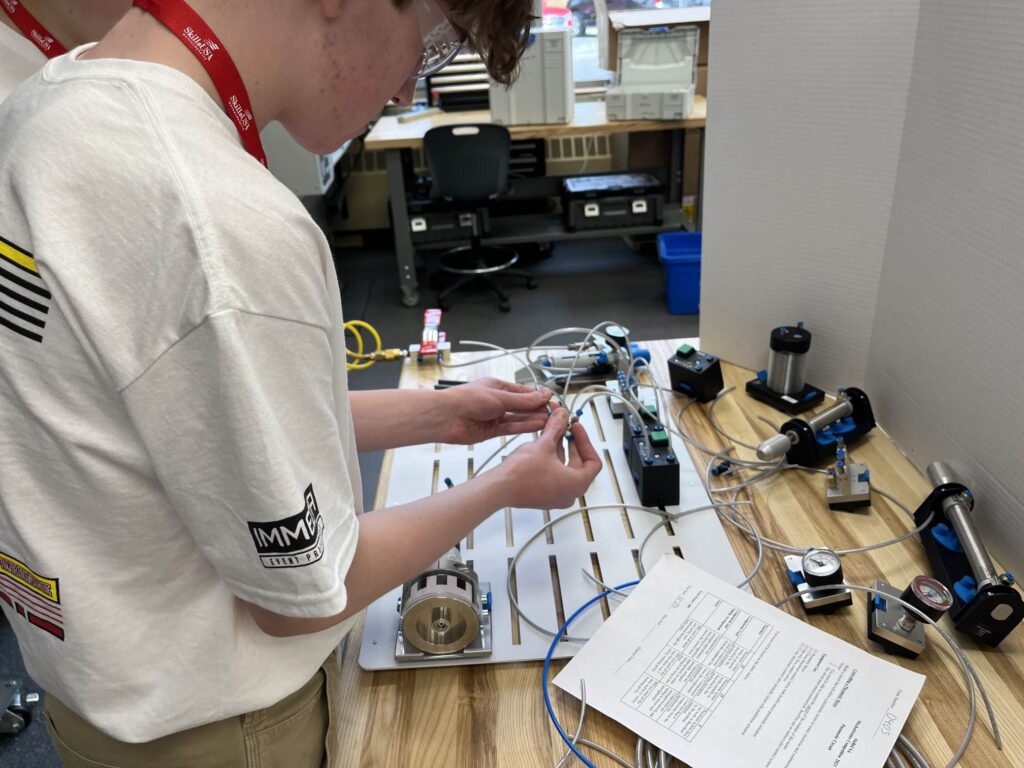
Students are also required to engage in real-time troubleshooting, making hands-on training technology and activities essential for developing a deep understanding of automated manufacturing environments.
Embracing the Future of Mechatronics with AET Labs
The most employable workers in Industry 4.0 will have a strong foundation in mechatronics that’s grounded in solid classroom technology. And with constantly evolving industry equipment and strategies, it’s difficult for instructors to keep their programs up on the cutting edge.
That’s why we’ve made it our business at AET Labs to connect New England pre-engineering instructors with the technology, lab support, and certifications they need to stay ahead of the curve.
Contact AET Labs for a local partner to help you bring hands-on mechatronics training to your lab.