
New England is leading the United States with bold clean energy goals and infrastructure investments. The region is already halfway to its goal of reducing carbon emissions by 80-100% by 2050 across the economy through investments in a wide range of decarbonizing technologies—and momentum is only building.
Offshore wind power, heat pumps, electric vehicles (EVs), and renewable energy sources are critical components of the initiative and address the need to double existing renewable energy capabilities. Keeping pace demands an influx of skilled technicians across all elements of the grid, with workforce needs expected to increase 34% by 2030 alone.
Much of the burden will fall on technical colleges and CTE programs in New England. They’ll need to provide industry-relevant training with cutting-edge classroom technology that prepares the next generation of clean energy workers for these lucrative careers.
Does your program have what it takes to connect students with New England’s evolving clean energy infrastructure? Here’s how the top institutions are leveraging technology and opportunity in the classroom.
EVs and EV Infrastructure
In New England, Massachusetts and Connecticut alone have over 130,000 EVs on the road, and Vermont is rapidly following suit. With nearly $100 million in planned funding for charging ports and infrastructure, qualified professionals will enjoy high demand for skills that translate directly to national markets.
Connecting Students with Accelerating Technology
The Legacy EV E-Mobility Education Program delivers a complete EV curriculum with a thrilling, race-oriented platform. Structured around the TopKart MSTEM3 electric go-kart, beginning learners have a chance to build, test, and tune an electric powertrain—and then test-drive the results of their work around the track!

This introductory program provides core skills that translate directly to the EV manufacturing and service industries, including:
- Physics of powertrains
- Wiring installation
- Testing and troubleshooting
- Maintenance
Even though EV powertrains contain high-voltage and corrosive components, the E-Mobility Education Program is designed to be hands-on for inexperienced students, including a custom Legacy EV battery pack.
Wind Power
Offshore wind power is a critical component of New England’s strategy for clean energy independence, and the U.S. economy is estimated to add 5.2 million jobs over the next decade.
Industrial systems are often expensive, large, and impractical for classrooms, and the top programs will need to invest in accessible equipment that provides industry-relevant skills.
Bringing Wind Turbines Down to Earth
The Nacelle – Wind Turbine Training System by Festo gives students an up-close look at a complete, scaled-down nacelle. Its full drive-train includes a main shaft, a gearbox with a transparent side cover, speed sensors, a hydraulic brake, and an asynchronous generator, providing a realistic experience of what professionals will encounter in the field.
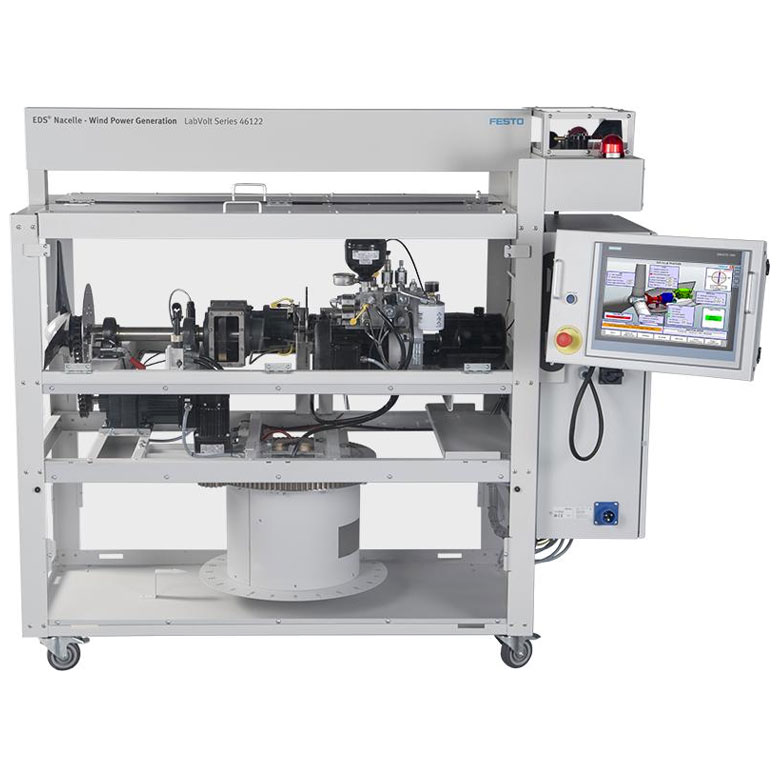
Learners will have a chance to explore:
- Nacelle components, safety, and controls
- Wind simulations through a user interface
- Gearbox, coupling, and alignment
- Hydraulic circuits and brakes
- Electrical systems and troubleshooting
The Nacelle is also designed to fit neatly into limited classroom space and supports add-ons for electric and hydraulic hub components.
Heat Pump Technology
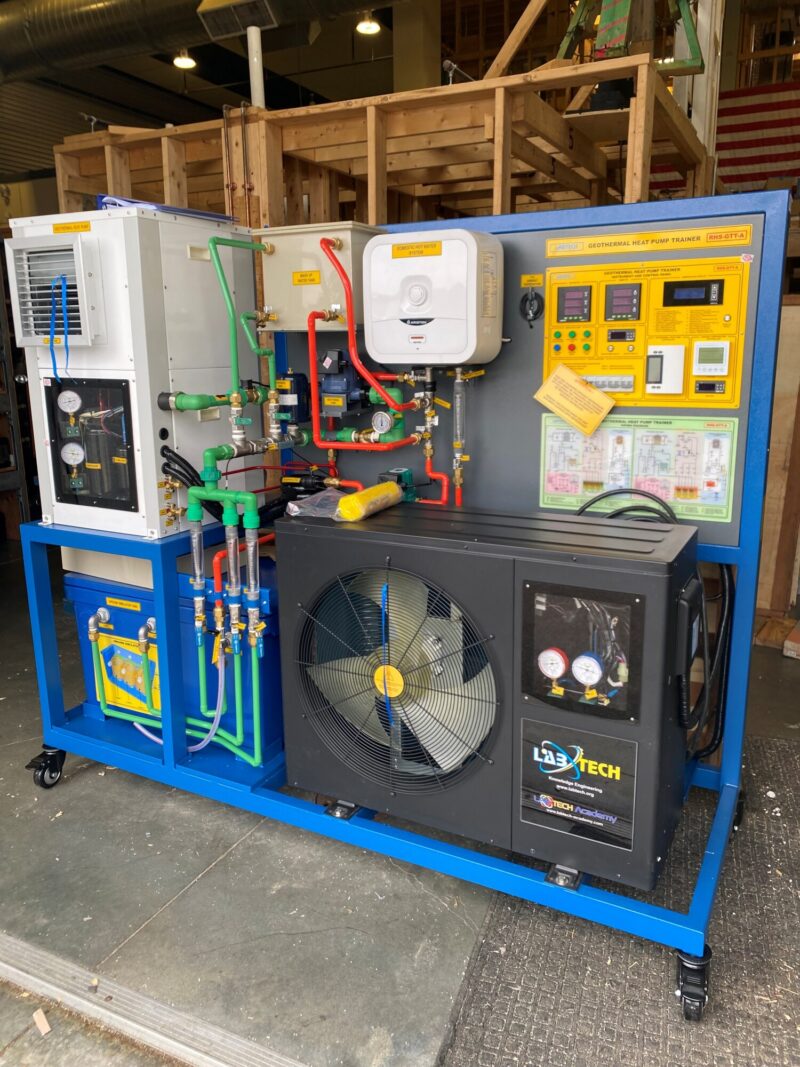
New England is known for its varying weather, but heat pump technology is keeping houses comfortable no matter the forecast. State-of-the-art heat pumps are 100% efficient down to -15F—ideally suited to the climate—and New England kicked off a $450 million campaign to drive heat pump adoption across the region in 2025.
Training the Next Generation of Technicians
LabTech is a leading firm developing cutting-edge HVAC training technology designed for technical colleges and CTE programs.
The Heat Pump Trainer - Inverter gives learners a complete air conditioning system to explore and analyze. It provides an up-close experience with components and functions, remote control systems, modes of operation, and P-H diagram plotting.
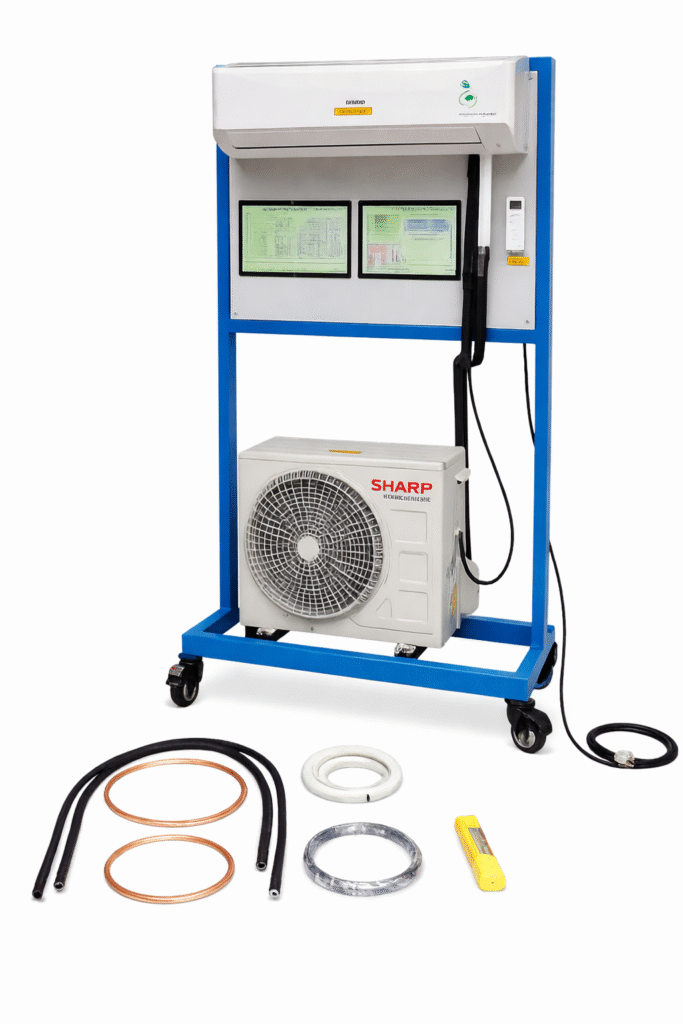
And when it comes to installation, the Mini-Split Installation Trainer safely familiarizes students with system components, wiring and pipe installation, cutting, bending, flaring, swaging and soldering, and evacuating and charging the air conditioner.
Solar and Renewables
Despite the reputation for cloudy weather, New England reliably gets around 200 days of full or partial sun each year. There are currently $2 billion worth of solar projects planned and underway in the region, and all of them demand skilled technicians.
Bringing Renewable Energy to Life
Matrix Renewables offers basic and advanced training platforms that illustrate how photovoltaic circuits, hydrogen fuel cells, thermal energy systems, hydropower, energy storage, and smart grid systems operate.
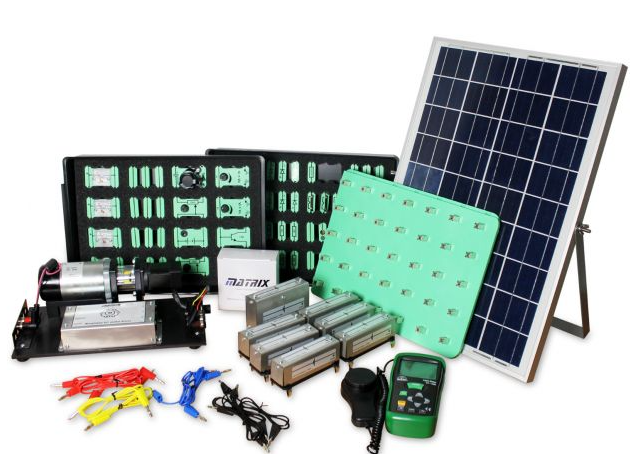
Modular and hands-on, learners gain skills that bridge the gap between theory and real-world applications. They’re designed with technical education in mind and give instructors a wide range of accessories to customize their curriculum.
Preparing for New England’s Clean Energy Future with AET Labs
Clean energy is the future of New England, and AET Labs is committed to connecting CTE programs and technical colleges with the best clean energy training equipment and resources on the market. We specialize in consultation, acquisition, installation, training, and maintenance of industry-relevant teaching technology for programs throughout New England.
We also assist with securing funding for training programs, including developing grant narratives, making equipment recommendations, and providing quotes for grant applications for organizations such as the Massachusetts Clean Energy Center.
Contact AET Labs for a local partner to help you connect your program with local industry skills needs in renewable energy.